
Meet the Muralist: Passamaquoddy Artist Norma Randi Marshall
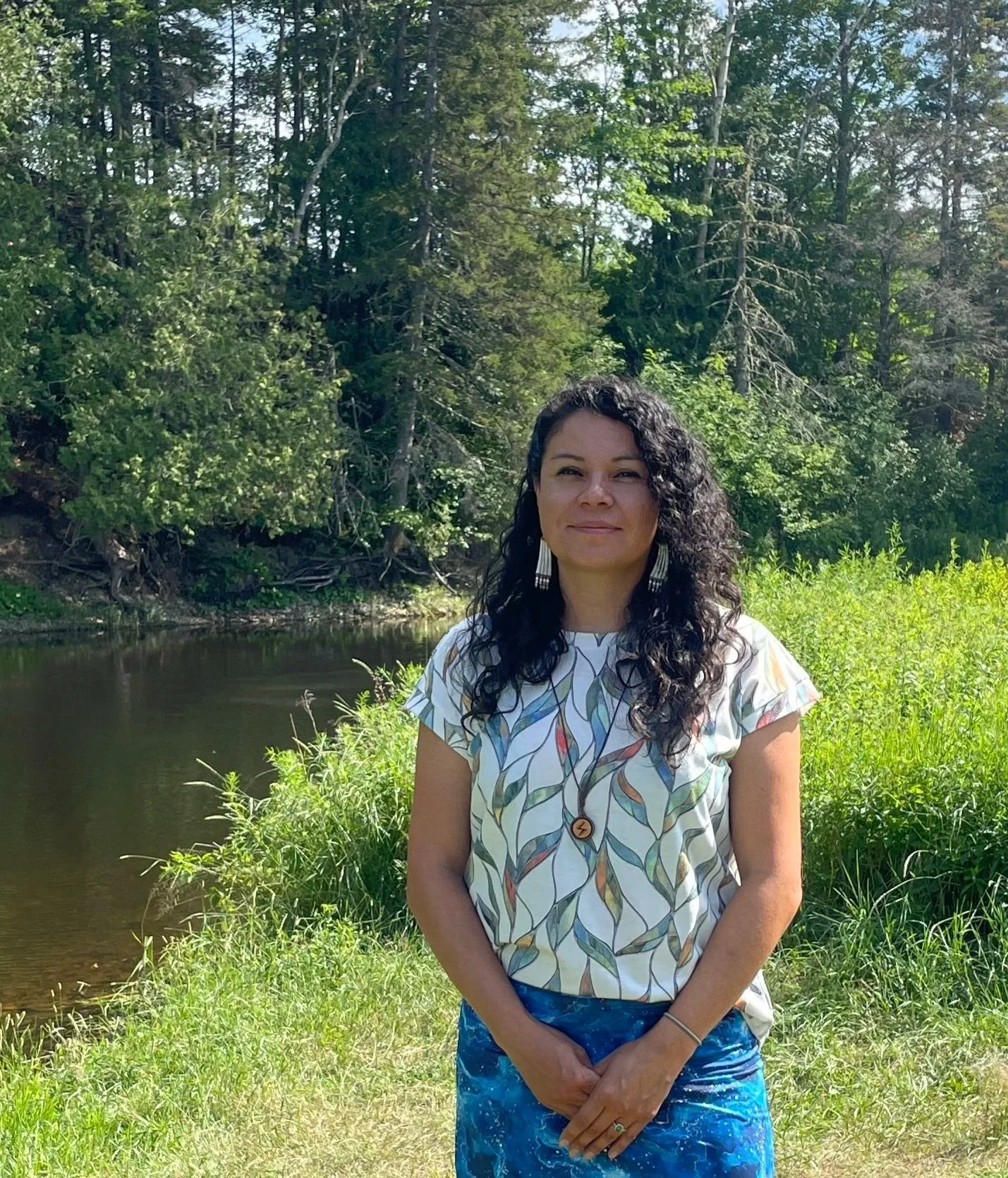
Artist Norma Randi Marshall
Where does the water in Casco Bay come from? Soon, visitors to the IDEXX STEM Learning Hub at the Children’s Museum & Theatre of Maine (CMTM) will be able to trace the answer — literally — on our walls.
We are thrilled to share that a new mural is coming to CMTM this fall, created by Passamaquoddy artist Norma Randi Marshall. The mural will trace the Abenaki watershed from the mountains near Bethel, through Sebago Lake and along the Presumpscot River, all the way to Casco Bay, using Wabanaki place names to honor the land's true history. This mural will help the more than 215,000 visitors who walk through our doors each year, including countless school groups, to see themselves as Water Protectors and understand their role in caring for the resources we all share.
We sat down with Norma to learn more about her artistic process, her inspiration for this mural, and her hopes for how it may help our visitors and community learn and grow.
CMTM: What drew you to this project?
Norma: This project had an intriguing theme and call to action that I felt aligned with. As a Wabanaki artist who provides art for public spaces, it is important to remember where I come from and those voices who taught Wabanaki values of caring for the land and waterways for the benefit of all. Those teachings always stick with me and as an indigenous person I feel obligated to the culture and community to share them. Sometimes the future can seem hazy and unclear, but with art we can still provide hope and alternative perspectives.
CMTM: Can you walk us through your process, from initial concept to what we'll see on the wall?
Norma: The ecology and terrain that compose this watershed is vast and varying. In consideration of this watershed and landscape, I ponder deeply on how we came to this moment. Wabanakik, or what is now known as Maine, has seen a lot of transitions from the early days of when the Wabanaki People settled here as the Laurentide ice sheet retreated to now. Our oral tradition of storytelling, which has lasted for literally thousands of years, is interwoven with the passage of time and environmental changes. From these stories we learn our lessons on:
Sacred places and how landscapes were formed
Big environmental shifts, such as how the tides were created and how animals became smaller
Caring for the land, plants, creatures, and waterways
The battle against greed and what happens if you eliminate important elements of the earth
And finally, providing humor as a balance to the responsibility of enduring work
These thoughts compose the basis for considering the landscape we call home and what will be portrayed on the mural. Elements of Wabanaki stories will be interwoven with the different activities that humans do to contribute to the health and longevity of water and land. Water, samaqan, is the foundation from which we are created in combination with earth elements, and is why it is important more now than ever to get the message and call to action out to the future caretakers. We are fortunate to call Mother Earth home, but it’s also important to teach the upkeep and maintenance of a home, otherwise it will crumble upon itself and would not be livable.
CMTM: What theme/techniques/colors should people look for when the piece is complete?
Norma: One will be able to find the range of colors that they would see in the palette of Maine skies, land, and waters. A rainbow of colors to represent the different seasons, the different times of day, and different weather conditions in a cohesive manner.
CMTM: What do you hope people take away from seeing and being in the space with the mural?
Norma: My hopes are that people will come away with a desire to somehow intentionally make a difference of positive impact towards water and land care. As well as to potentially ally themselves with others working on this front, such as other indigenous communities throughout Turtle Island and different conservation groups. I hope they may grow up and be inspired to think, dream, and provide alternative ideas and solutions to:
Land and water care
The creation of items that require water
Industries that hog and guzzle water
Farming practices
Legislation that works in favor of people over corporations
Providing water to those in need and maintaining clean water
If everyone contributed something meaningfully small and in their own way, it would add up collectively to make a difference.
CMTM: What advice would you give young artists?
Norma: For young artists, I would suggest to continue practicing their medium, pursue challenges that intrigue them, learn from those challenges and have a positive takeaway even if perhaps their intention didn’t work out. Learn to network and continue to advance your own learning and skills of your trade. Keep your determination and learn from some of your own favorite artists as to what their path looked like to success.
About Norma
Norma Randi Marshall is a Passamaquoddy artist from Sipayik, where she grew up on the eastern coastal edge of Maine, Peskotomuhkatikuk, and still lives in this rural area to this day.
She is known for her large oil landscapes that depict the rugged beauty of Downeast, her digital artwork, and other creations that reflect her life, heritage, and connections to Wabanakik. She has been featured at the Abbe Museum, Coastal Maine Botanical Gardens, and Farnsworth Museum, she has done illustrative work for interpretative panels at Erickson Fields in Rockport, the Town of Yarmouth at their Sipuhsisuwi Kcihq - Riverfront Woods Trails, at Hog Island in Bremen and at the Puffin Project Visitor Center in Rockland, Maine.
You can follow Norma on instagram @emerald_forests to see more of her art and life or visit her website at www.normarandi.com
Thank you to the Casco Bay Estuary Partnership and Sebago Clean Waters for their generous support of this project.